Neck Pain and it’s Causes
Cervical Radiculopathy ("Pinched Nerve")
Cervical radiculopathy occurs when a nerve in the neck becomes irritated or compressed. This is often caused by a disc herniation, arthritis, or narrowing of the spaces where the nerves exit the spine. Symptoms may include neck pain, numbness, tingling, weakness, or pain that travels into the shoulder, arm, or hand. The exact symptoms depend on which nerve is affected.
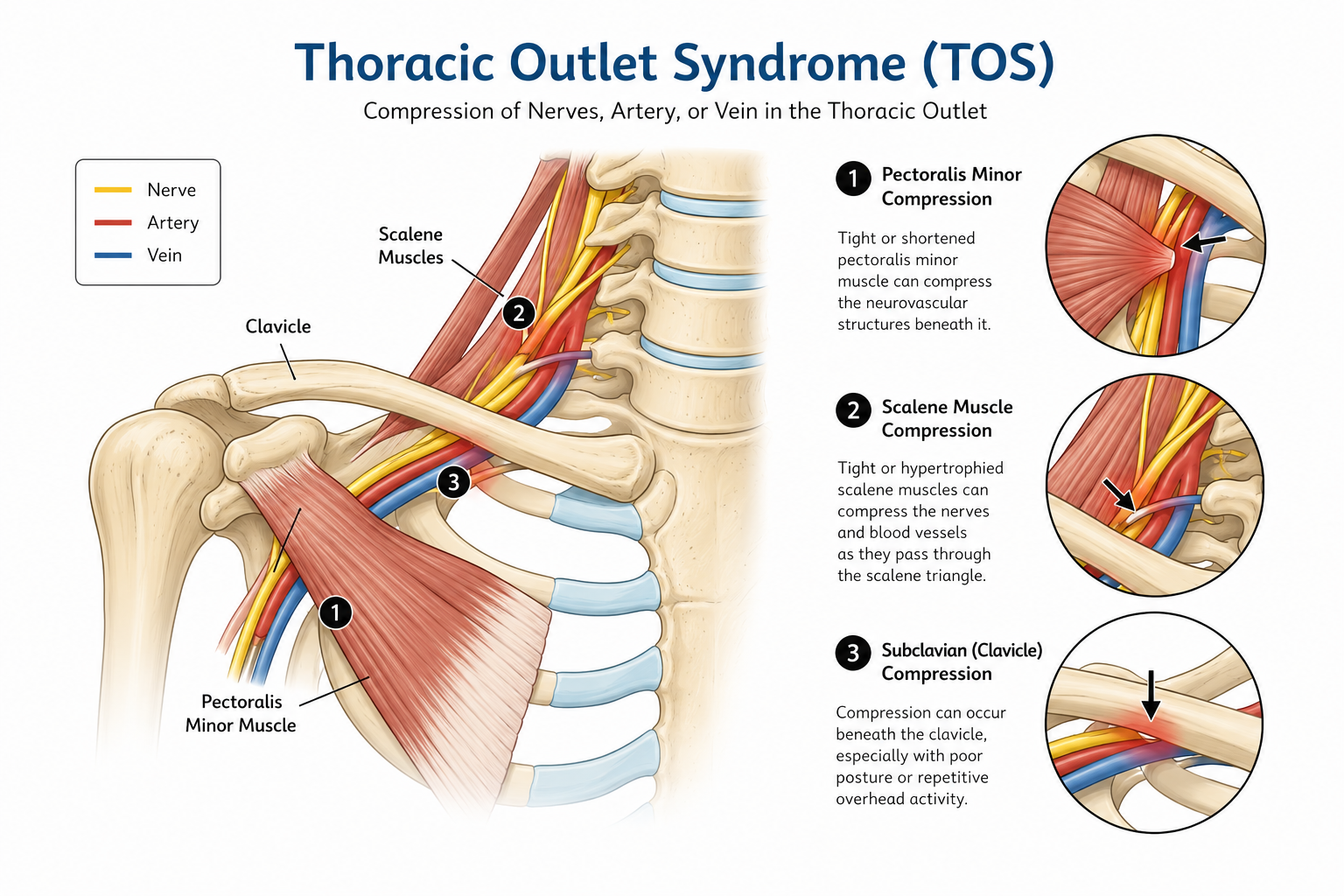
Thoracic Outlet Syndrome (TOS)
Thoracic outlet syndrome occurs when the nerves or blood vessels traveling from the neck into the arm become compressed. This can happen because of poor posture, tight muscles, repetitive movements, or anatomical differences. Symptoms often include pain in the neck or shoulder, numbness or tingling in the arm or hand, weakness, or a heavy feeling in the arm. Many people notice their symptoms worsen with overhead activities.
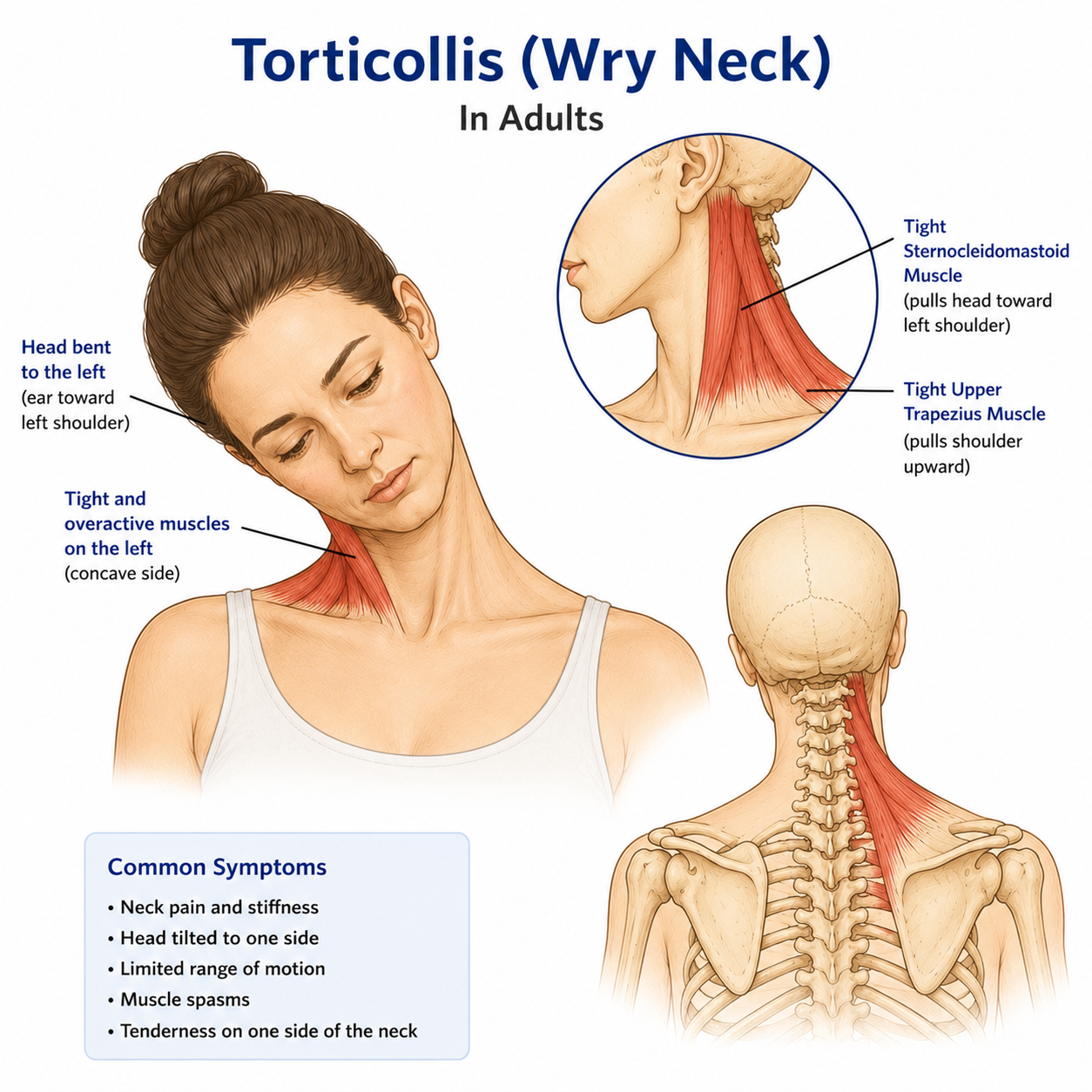
Torticollis ("Wry Neck")
Torticollis is a condition where the muscles in the neck suddenly tighten, causing the head to tilt or rotate to one side. It can develop after sleeping in an awkward position, minor injury, stress, or muscle irritation. People with torticollis often experience severe neck stiffness, muscle tightness, and difficulty turning their head. Although painful, most cases respond well to conservative treatment.
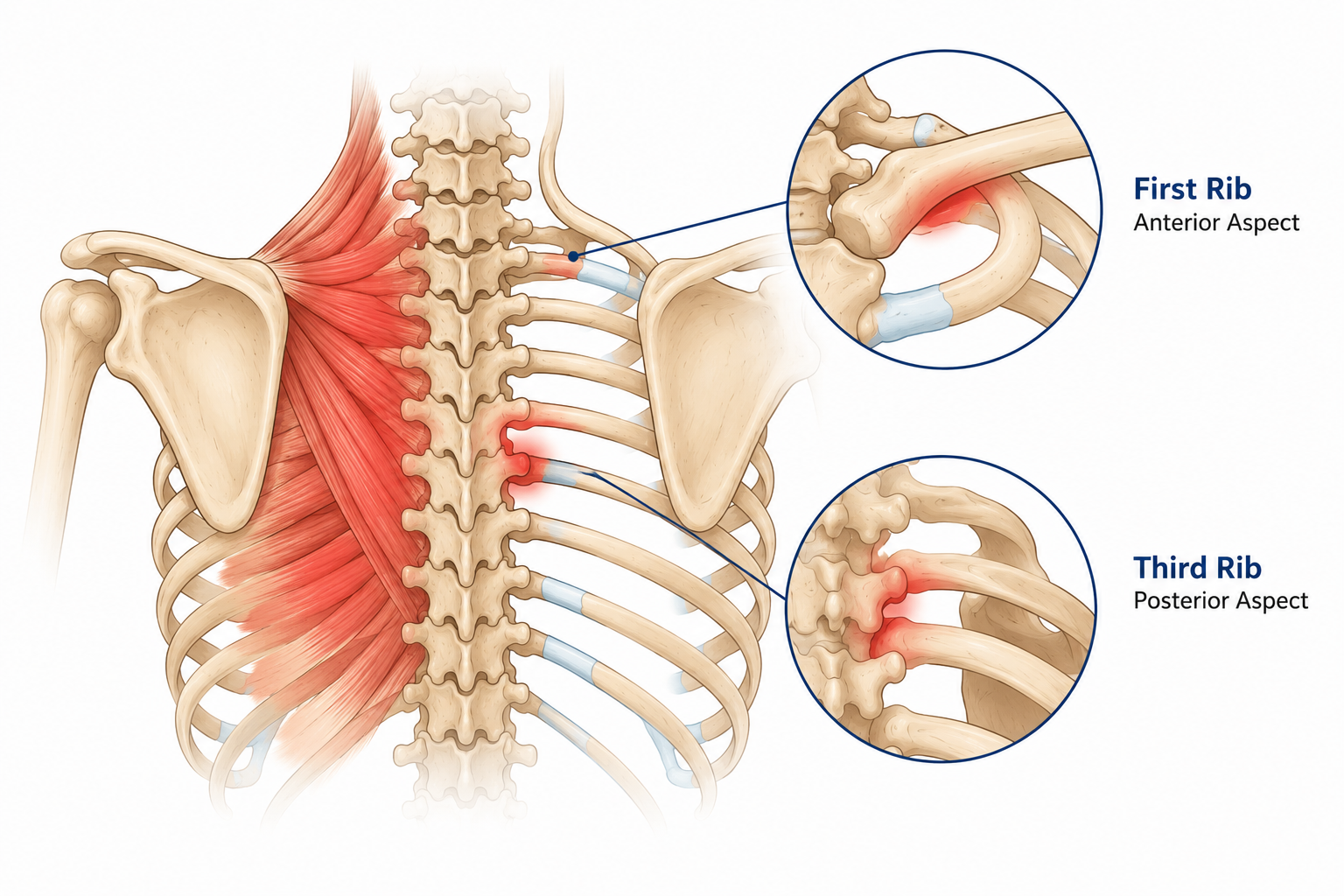
Rib Subluxation
A rib subluxation occurs when one of the upper ribs becomes irritated or does not move properly where it connects to the spine. This can cause pain between the shoulder blades, upper back, neck, or chest. Many people notice discomfort when taking a deep breath, twisting, coughing, or reaching overhead. Because rib pain can mimic shoulder or neck problems, a proper examination is important to identify the source.
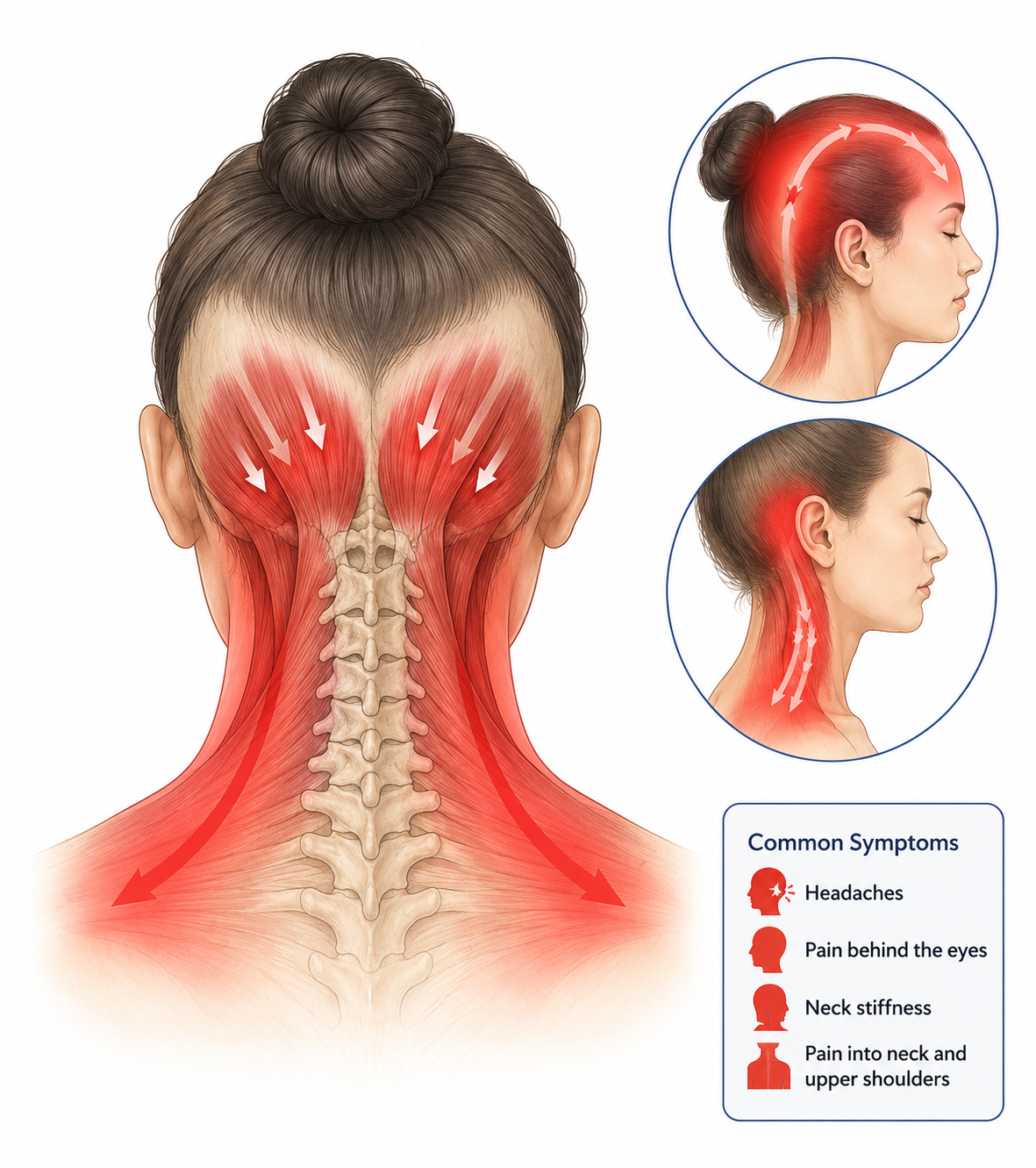
Occipital Muscle Tension
The muscles at the base of the skull help support the weight of the head. When these muscles become tight from stress, poor posture, or prolonged computer use, they can create pain at the base of the skull that may spread into the neck, shoulders, or forehead. This type of tension is a common cause of tension headaches and can also contribute to reduced neck movement. For other headache types press here.
Whiplash
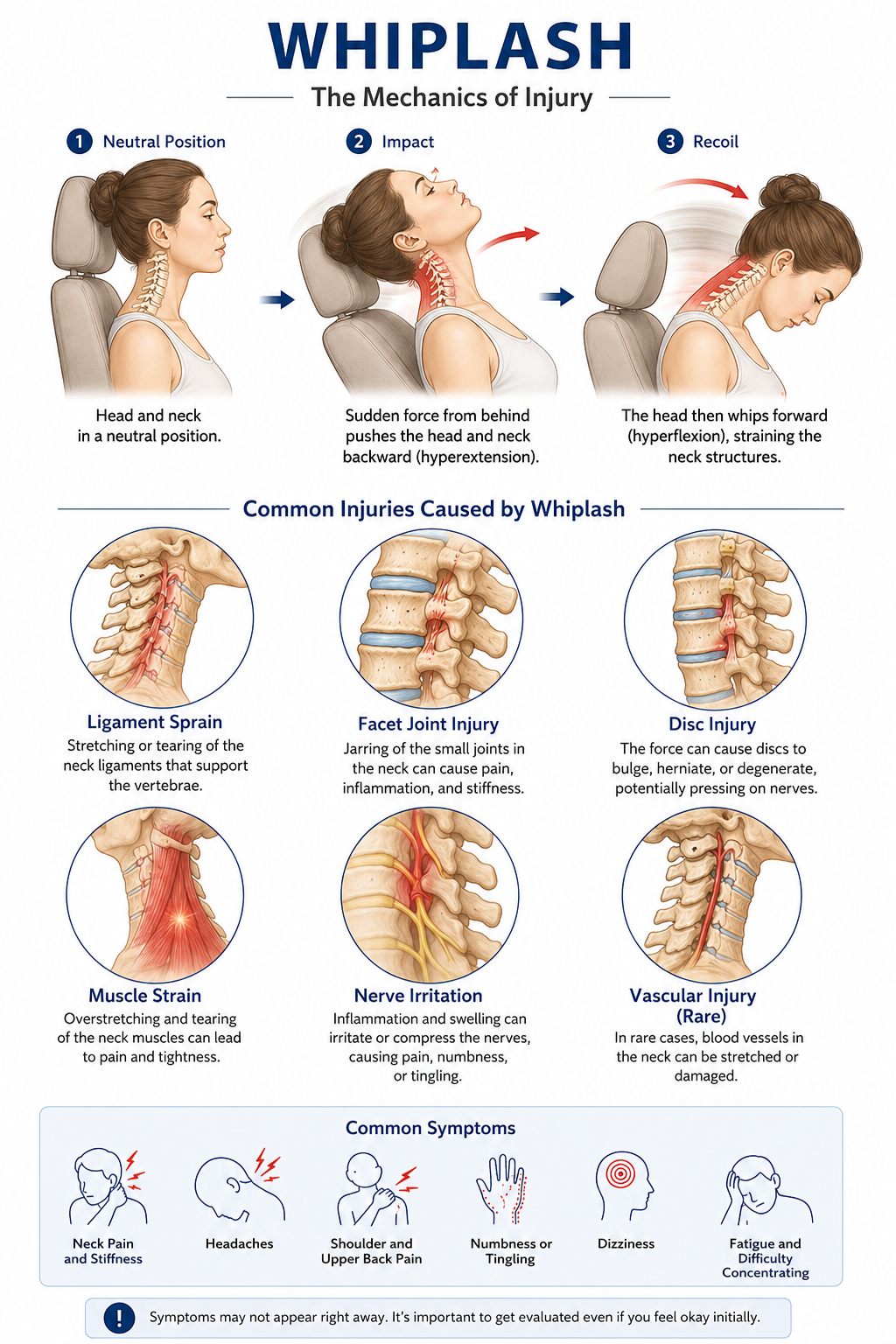
Whiplash is a neck injury caused by a sudden, forceful movement of the head, most commonly during a rear-end car accident, but it can also occur from sports injuries, falls, or other traumatic events. The rapid motion forces the neck into hyperextension and then hyperflexion, placing significant stress on the muscles, ligaments, joints, discs, and nerves of the cervical spine. While some people experience immediate pain and stiffness, symptoms often develop gradually over the next 24 to 72 hours. Common complaints include neck pain, headaches, reduced range of motion, shoulder or upper back pain, dizziness, numbness or tingling into the arms, and muscle spasms. Because whiplash can affect multiple structures in the neck, a thorough evaluation is important to identify the source of the injury and develop an appropriate treatment plan to restore normal movement and reduce long-term complications. For more information click Here.
Cervical Facet Syndrome
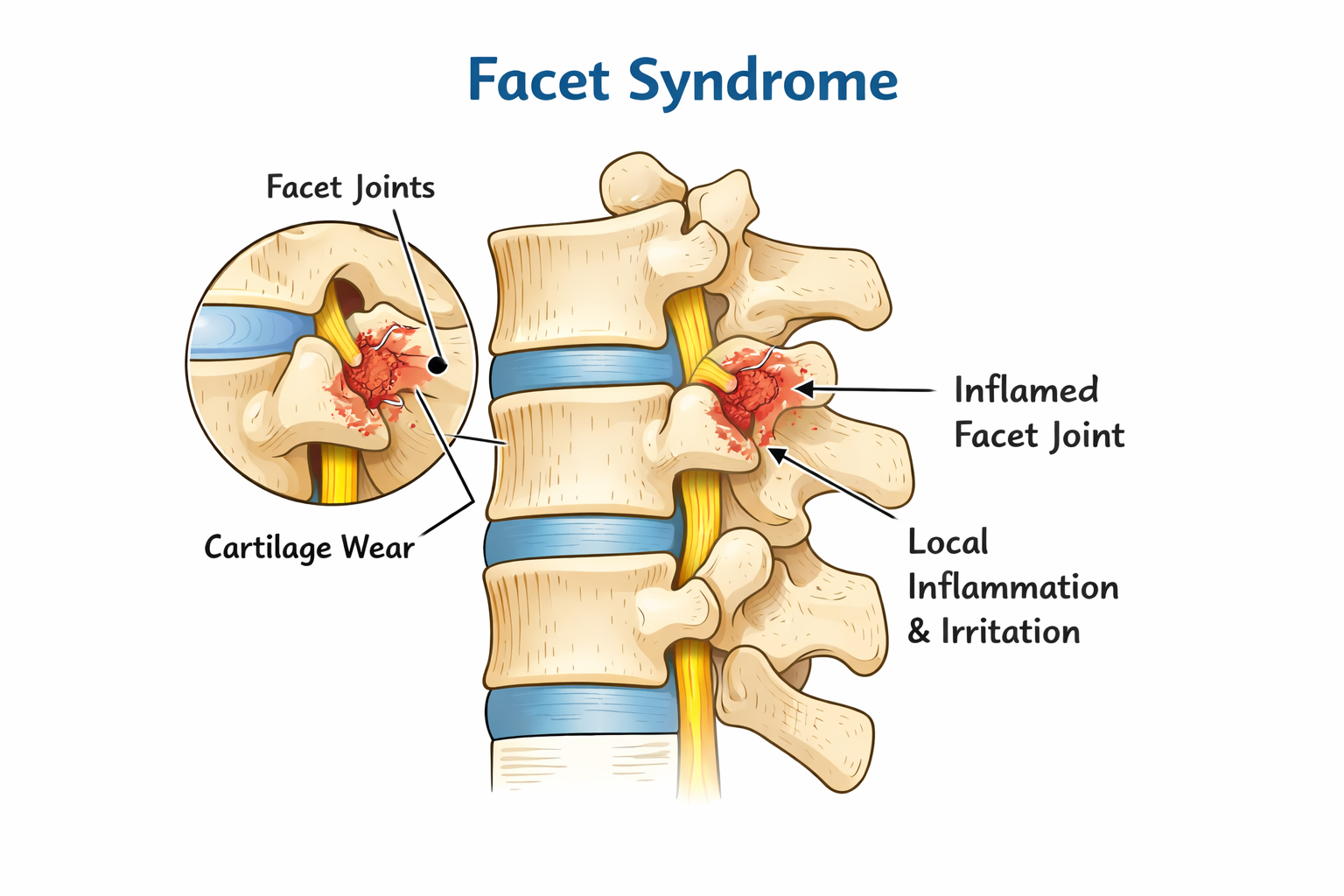
Facet syndrome occurs when the small joints in the neck become irritated or inflamed. These joints allow the neck to bend and rotate smoothly. When they become irritated from arthritis, repetitive movements, or injury, they can cause localized neck pain, stiffness, and discomfort with turning or looking up. The pain may also spread into the shoulders or upper back but usually does not travel into the hand.
Fix the cause. Feel the difference.
Reach out to get scheduled today!
The Key to Relief Starts With the Right Diagnosis.
Important: While many cases of shoulder pain are musculoskeletal, shoulder pain can also be a symptom of a heart attack. If you have chest pain, shortness of breath, pain into the jaw or left arm, nausea, sweating, or dizziness, call 911 immediately.
Neck Pain
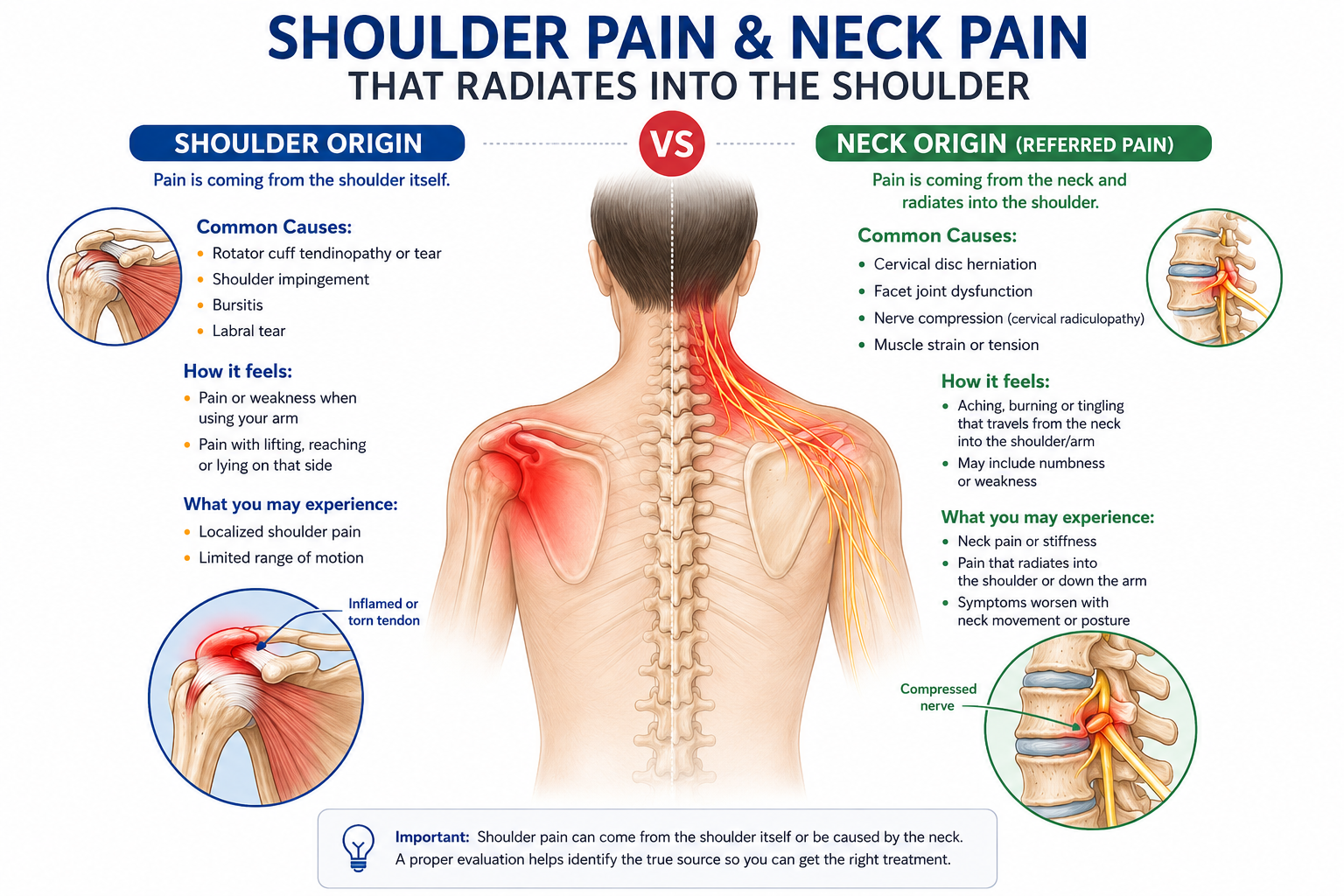
Neck pain can sometimes feel like shoulder pain because the nerves that leave the neck travel into the shoulder and arm. Conditions such as a pinched nerve, disc herniation, or arthritis in the neck can cause pain, numbness, tingling, or weakness that radiates into the shoulder, arm, or hand. A thorough examination can help determine whether your symptoms are coming from the neck, the shoulder, or a combination of both, allowing for the most effective treatment plan.
Shoulder Pain
Shoulder pain usually comes from the muscles, tendons, or joints of the shoulder itself. It is often worse with reaching overhead, lifting, or certain arm movements. Common causes include rotator cuff injuries, tendon irritation, bursitis, arthritis, or shoulder instability. Pain is typically felt around the shoulder joint and may limit your range of motion.
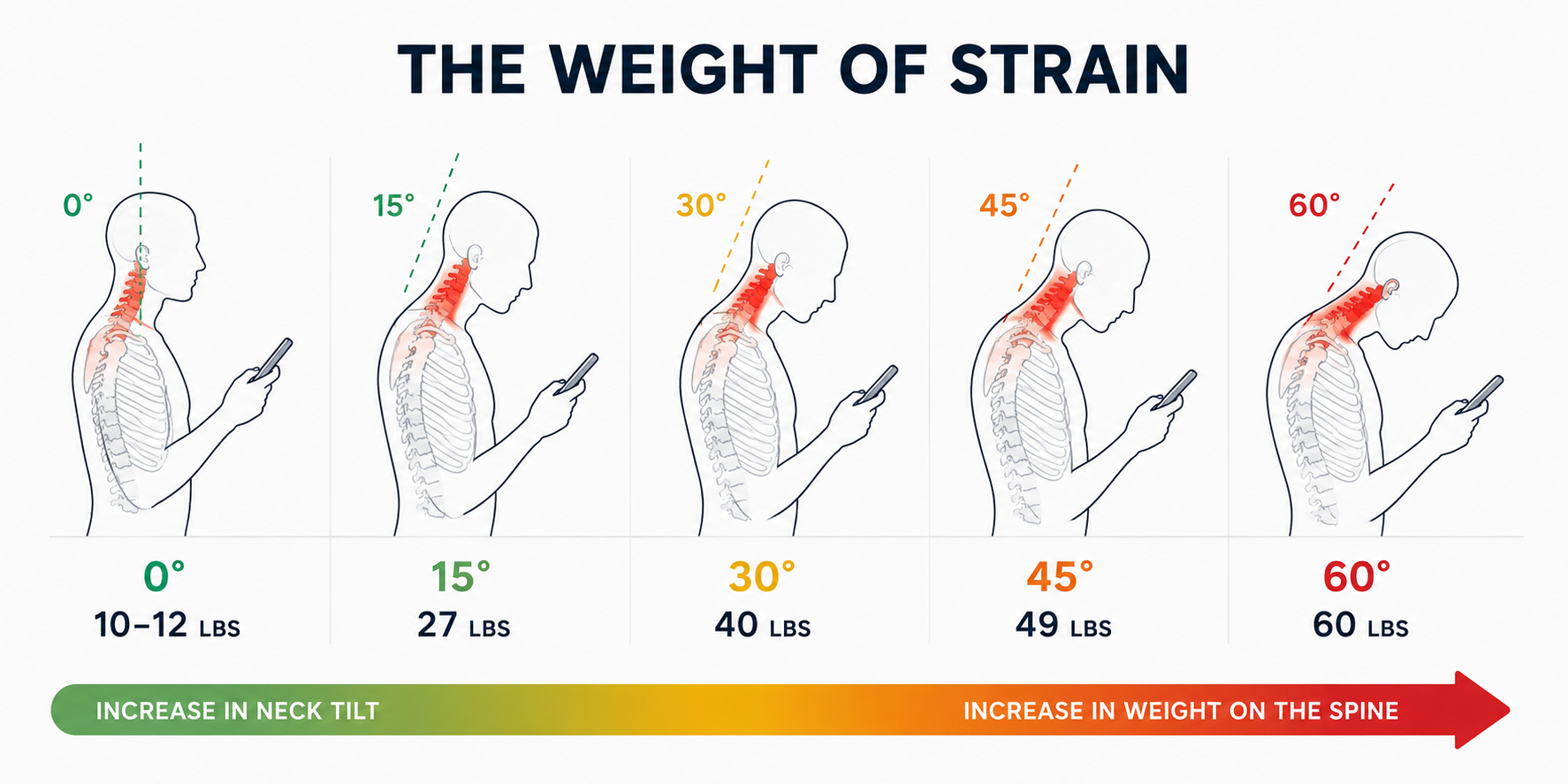
Forward Head Posture
Your head weighs about 10–12 pounds in a normal position, but as it moves forward, the stress placed on the neck increases dramatically. Even a small forward shift in posture can force the cervical spine to support the equivalent of 20–40+ pounds of pressure.
Over time, this excessive stress may contribute to Text Neck also known as loss of the normal cervical curve. As the neck straightens, abnormal pressure builds along the front of the vertebrae and discs, accelerating degeneration, disc wear, bone spur formation, muscle tension, headaches, and nerve irritation.
Common symptoms include neck stiffness, tension headaches, shoulder tightness, reduced mobility, and numbness or tingling into the arms and hands. Correcting posture and restoring proper spinal alignment can help reduce stress on the neck and improve long-term spinal health.
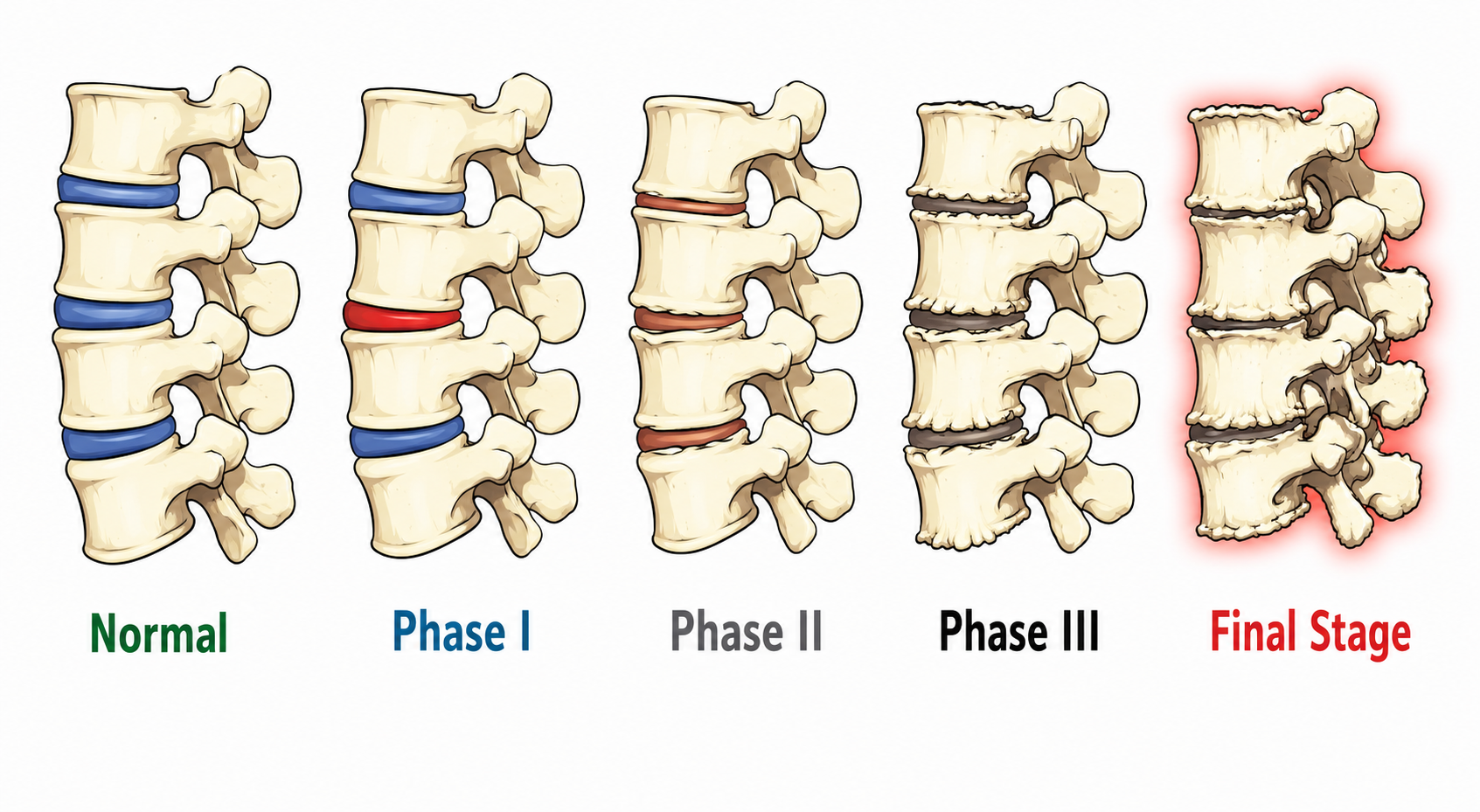
Spinal degeneration
Spinal degeneration is a gradual process that develops over time as the spine experiences chronic stress, poor posture, abnormal movement, injuries, and repetitive wear. Although aging naturally plays a role, degeneration is often accelerated by improper spinal mechanics and long-term postural strain.
In the early stages, the spine may begin losing its normal alignment and mobility. Poor posture, repetitive stress, prolonged sitting, forward head posture, previous injuries, and muscle imbalances can all create uneven pressure on the discs and joints. As the body attempts to compensate, muscles tighten to stabilize the area while certain joints become restricted and overloaded.
Over time, this abnormal stress may cause the spinal discs to lose hydration and elasticity. Disc spaces can begin narrowing, reducing the spine’s ability to absorb shock properly. This stage is often associated with stiffness, tension, reduced mobility, and intermittent pain.
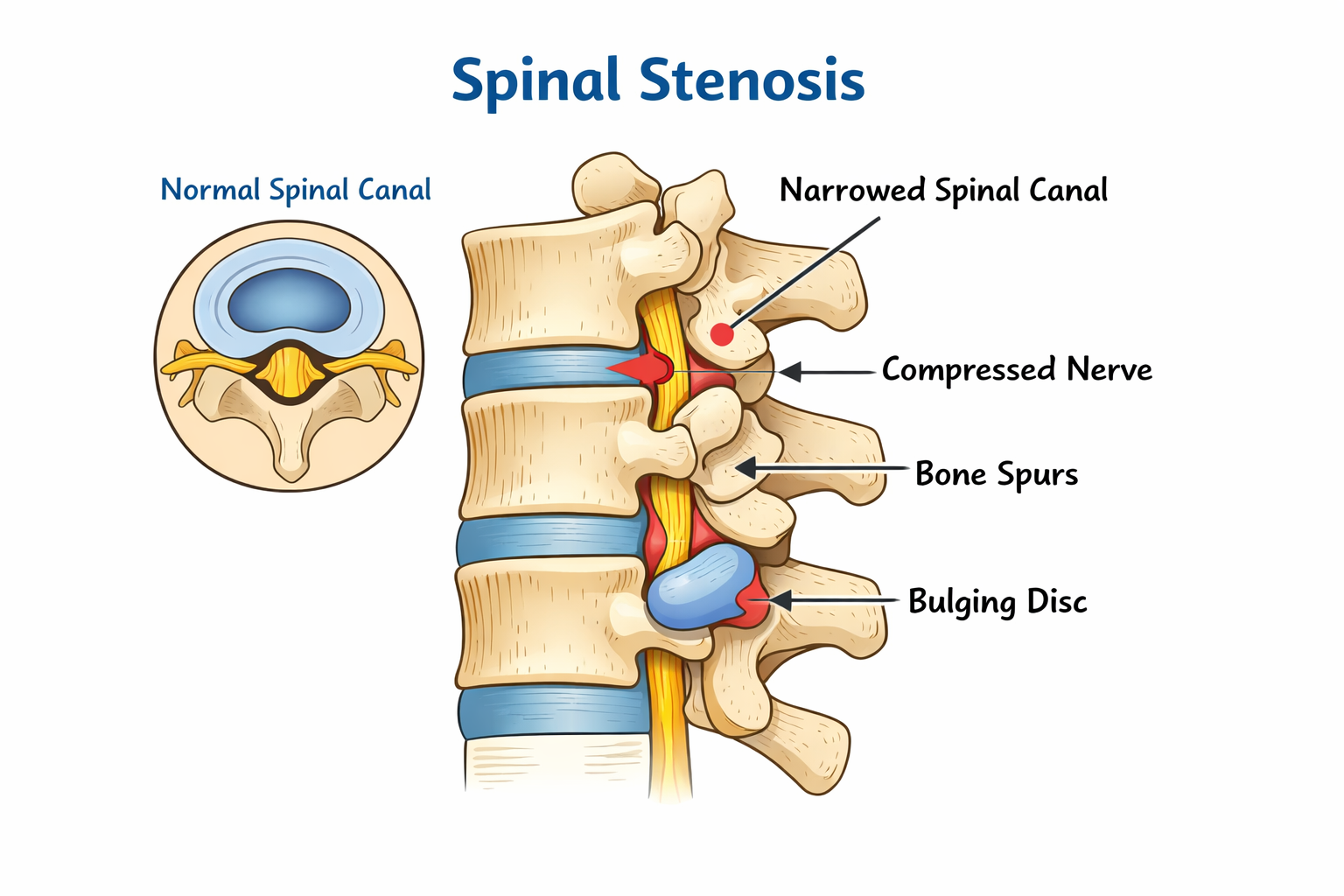
As degeneration progresses, the body may begin forming bone spurs in an attempt to stabilize unstable segments of the spine. Ligaments may thicken, joints may become arthritic, and surrounding muscles often become chronically tight from prolonged compensation. Poor posture — especially forward head posture — can significantly accelerate this process by increasing the amount of force traveling through the spine.
The position of the head is particularly important in the cervical spine. In a neutral position, the head weighs approximately 10–12 pounds, but as the head moves forward, the stress placed on the neck increases dramatically. This excessive load creates increased compression on the discs, joints, and nerves in the neck while also altering mechanics throughout the entire spine.
In more advanced stages of degeneration, disc height loss, arthritis, bone spur formation, and spinal narrowing may begin irritating nearby nerves. This can contribute to chronic pain, numbness, tingling, weakness, headaches, reduced flexibility, and radiating symptoms into the arms or legs depending on the area involved.
Degeneration is often a slow and progressive process, but improving posture, restoring proper spinal motion, strengthening supporting muscles, and reducing abnormal stress on the spine can help slow progression and improve long-term spinal function.
Book an Appointment
If you're interested in working with us, complete the form with a few details about your project. We'll review your message and get back to you within 48 hours.